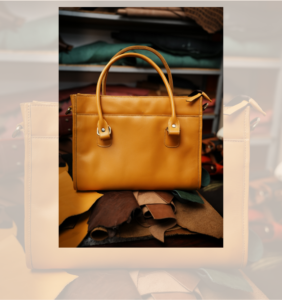
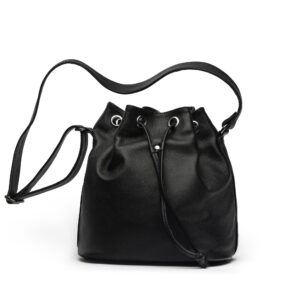
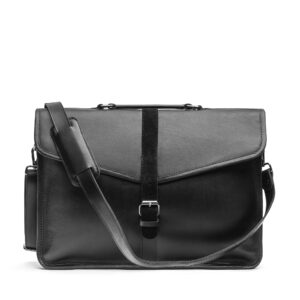
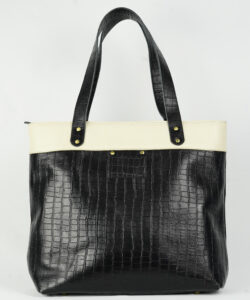
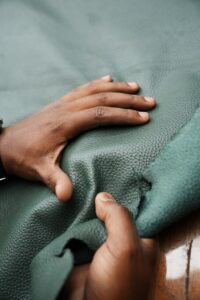
Have you ever noticed how one leather bag stands neatly on its own while another feels soft and relaxed? Or how two bags can both be described as leather yet have completely different textures?
Those differences begin with the material and continue through the way the bag is made. Leather can be selected and finished specifically for handbag making, but there is no single type reserved only for purses. The right choice depends on the shape, feel, and function the designer wants to achieve.
Understanding a few leather terms can help you appreciate what goes into the bag you carry.
Different Leather Names Tell You Different Things
Cowhide, full-grain, pebbled, and suede are often discussed as though they are competing categories. They actually describe different aspects of a material.
Cowhide tells you the animal the leather comes from. Full grain describes leather that retains its original grain surface without sanding it away. Pebbled describes a textured appearance. Suede describes leather with a soft, raised surface.
A single bag can therefore be made from cowhide that is both full-grain and pebbled. Knowing how these descriptions fit together makes a product label much easier to understand.
Cowhide for Everyday Bags
According to United Leather’s handbag leather guide, cowhide can be selected in different thicknesses and degrees of firmness to suit the design. It can give a work tote body and structure or be made supple enough for a more relaxed silhouette.
The finished result depends on how the leather is processed and how the bag is constructed. Two cowhide bags can feel very different in your hands, even when they come from the same type of animal.
For an everyday bag, the useful question is how the material works with the design: does it provide the right balance of support, flexibility, and comfort?
Full-Grain Leather and Natural Character
According to Leather Naturally’s guide to leather making, full-grain leather retains the hide’s original grain surface. Natural variations, including changes in grain and small markings, may remain visible depending on the finish.
These details can give each piece its own character. A completely uniform surface is not the only way quality leather can look.
Full grain describes the surface of the leather; it does not tell you everything about the finished bag. Material selection, tanning, stitching, lining, and construction also deserve attention.
Smooth or Pebbled Leather?
Texture changes the personality of a handbag.
Smooth leather offers a clean surface that lets color and shape take the lead. Pebbled leather brings a more pronounced grain that adds depth and visual interest. Depending on the finish, that texture can also make minor everyday marks less noticeable.
Pebbled leather is not a separate animal hide or an automatic quality grade. Its texture may be developed through processing such as tumbling or created through embossing.
Choosing between smooth and pebbled leather often comes down to the look and feel you enjoy and the particular finish on the bag.
Suede for Softness and Contrast
Leather Naturally’s leather care guide explains that suede comes from the reverse side of leather or a split layer beneath the grain. It has a soft, napped surface. Its velvety appearance gives a bag a different feel from smooth leather.
Used on a flap, a decorative detail, or a larger panel, suede can introduce contrast within the same design. Pairing textures also gives a color combination another dimension.
Suede needs care suited to its surface. It is best protected from wet conditions, and products intended for smooth leather should not automatically be used on it.
Why Thickness and Structure Matter
Thicker leather does not automatically make a better handbag. A structured tote and a soft shoulder bag need different material properties.
Designers consider both thickness and firmness, sometimes called the leather’s “temper.” Handles and attachment points also have different demands from the body panels.
Lining, reinforcement, hardware, and construction contribute to the finished shape and weight. A bag that holds its form may owe that structure to several thoughtful choices working together.
For the person carrying it, the result should feel practical: enough support for its intended use, with a comfortable weight before everyday essentials go inside.
How We Approach Leather at Joywot Origin
At Joywot Origin, we choose leather according to the style and function of each bag. Our materials include cowhide, sheepskin, goat leather, pull-up leather, and suede made from cowhide, goat, or sheepskin. We use different combinations to achieve the structure, softness, and texture we want for each design.
We love bringing these materials together. A firmer cowhide can provide support around a bag’s outer frame, while softer leather or suede adds a different feel to other parts of the design. Depending on the bag, we may pair thicker leather with thinner, more flexible leather, considering how each part will look, feel, and function.
Our supplier handpicks leather from the tannery in Ethiopia, while we develop designs and color combinations here in California. We consider the materials together with the bag’s shape, carrying comfort, and everyday purpose. Our focus is on functional, fashionable bags that people can enjoy beyond a passing trend.
We produce limited editions as part of our commitment to slow fashion. Working in smaller batches gives artisans room to focus on individual pieces and their details, one bag at a time. Each design brings together our choices about materials, color, and function in a bag made to be used and enjoyed.