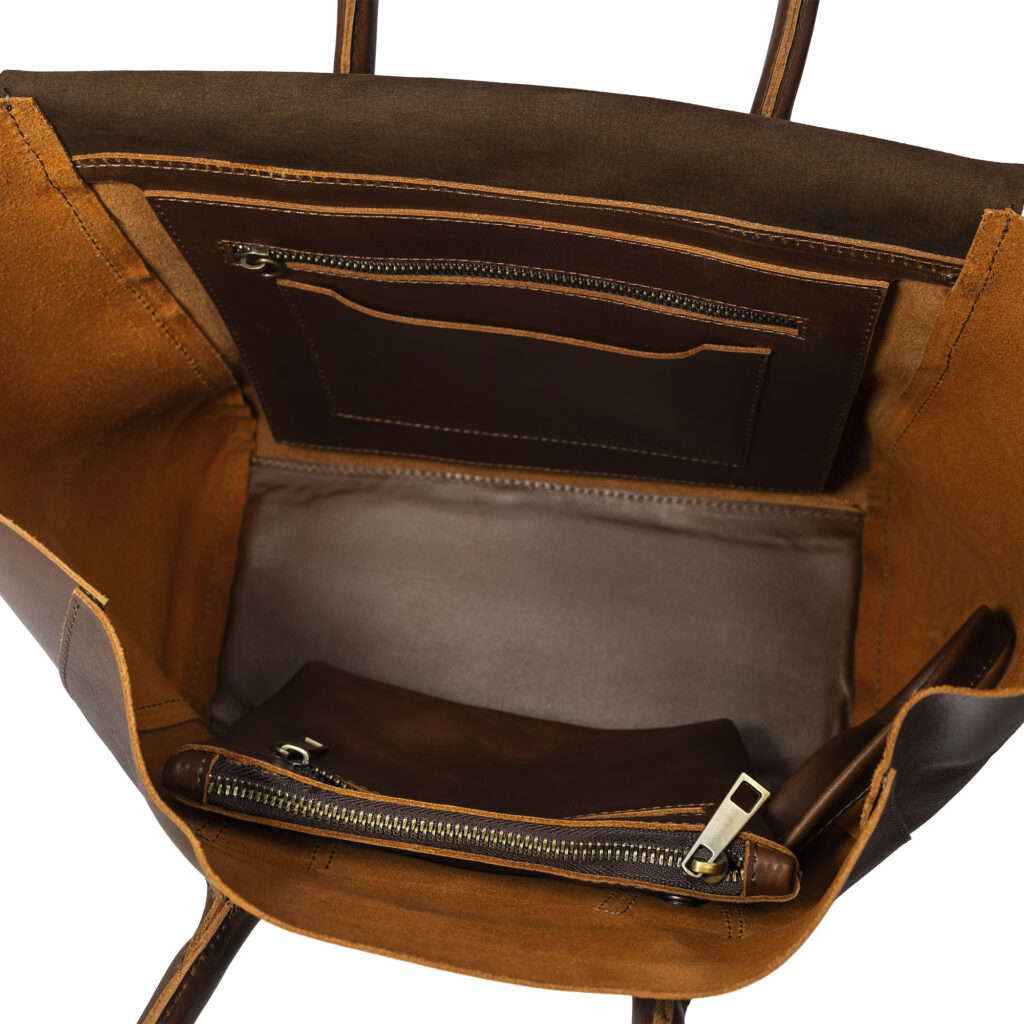
“I can smell the bags at the door.” That’s what one customer said at one of our pop-ups in Concord, California. Why does real leather smell different? What makes it special compared to faux leather? Most people recognize the scent of real leather. This unique fragrance is a direct result of the tanning process. There are two main types of tanning: Vegetable Tanning is one of the oldest methods of leather production. It uses plant-based sources to tan the hide, such as tree bark, leaves, wood, and other natural materials. Chrome Tanning is a modern method of turning animal hide into leather using chromium salts. The tanning process influences the scent of the leather. Vegetable tanning often gives leather an earthy, woody aroma, while chrome tanning may produce a faint metallic or mineral undertone. In both cases, genuine leather should smell natural and inviting. The absence of this warm, complex scent can be a red flag and is often a key difference between real leather and synthetic materials. According to BaliYaBag, you do not need to be a fragrance specialist to develop the skill of identifying real leather. Here are a few practical ways to use scent as a guide: Start with a reference point. Use your JoyWot bag and intentionally notice its scent. Take a moment to recognize the rich, warm, earthy aroma that doesn’t smell artificial. Let that become your comparison standard. Try the direct smell test. When examining a bag, bring it close and take a slow breath in. Does the scent feel natural, warm, and slightly earthy? Or does it smell sharp, plastic-like, or overly chemical? Use gentle friction. Leather is porous and reacts to warmth. Rub a small, discreet area of the bag for about 10–15 seconds. The heat from your fingers can help release the material’s natural aroma. Genuine leather often produces a stronger version of its warm scent, while synthetic materials may release a more noticeable chemical odor. Check the inside. Don’t focus only on the exterior. Open the bag and smell the interior, especially along the seams or in areas without lining. In unlined bags, the natural leather is more exposed, which often reveals a stronger and more authentic scent since it is less affected by dyes, coatings, or surface treatments. The scent of real leather is more than just a pleasant aroma; it reflects the material’s natural origin and craftsmanship. By learning to recognize that warm, earthy scent, you give yourself a simple yet powerful tool to identify quality and authenticity. At Joywot, we value materials that are natural, lasting, and true to their origin. Sometimes, the first sign of quality isn’t what you see it’s what you smell.

Featuring Abby Young Styling Author Introduction Abby Young, Founder of Abby Young Styling Abby Young is a Style & Image Strategist and founder of Abby Young Styling (AYS), advising public-facing leaders on how personal style shapes credibility, authority, and influence. Based in the San Francisco Bay Area, she also serves as Fashion Stylist Director of Troora Magazine. Her work blends image psychology, cultural literacy, and strategic wardrobe planning to support intentional visibility. You can find her on Instagram @abbyyoungstyling or on her website abbyyoungstyling.com Before You Speak, Your Bag Is Already Talking Before you speak, move through a room, or introduce yourself, your bag is already talking. It sits at eye level and moves with you. It is often one of the first elements people register, whether consciously or not. Because of that, it quietly shapes perception long before words enter the picture. Most people choose a bag based on style, practicality, and functionality. Very few consider it as a communication tool. In reality, your bag is one of the strongest visual signals you carry with you. Why Bags Are Read Differently Than Clothing Clothing shifts with seasons, trends, and supports your outfit in different ways; shoes ground you, jewelry elevates you, and jackets complete your look. Now, a bag plays a different role. Bags are read as intentional choices that people can make assumptions from. For example, people might read your bag as more polished, relaxed, formal, casual, current, or refined based on its structure, material, and scale. This is not about luxury or status. It is about coherence. The Visual Language of a Bag Every bag talks with subtle cues. Most people sense these cues before they can even articulate them. Structure and Shape Structured silhouettes are often read as composed and steady. Softer shapes tend to feel relaxed and informal while sturdier shapes tend to feel more polished and formal. Neither is right or wrong, but each sends a different message depending on context. Material and Finish Leather quality, texture, and finish for example suggests polish, timelessness, and intention. Canvas for example communicates ease, function, and practicality. Scale and Proportion When a bag is well proportioned to the body, it feels integrated into the outfit rather than distracting and reads as intentional, composed, and considered. For example, when the size is off, the bag can look disjointed from the outfit and attention shifts away from the person wearing it because the proportion doesn’t match. Context Shapes Meaning It’s important to remember that context can also shape the meaning your bag conveys. What works for a formal event does not always work for an adventure day or for work The most effective bags are not trend driven, they are context aware. A well chosen bag supports the context you are moving through, it doesn’t compete for attention but rather adds and supports your outfit and the room you are in. Choosing an Everyday Bag With Awareness Selecting an everyday bag is less about finding the perfect piece and more about understanding what you want your presence to communicate. Thoughtful design makes this easier. Bags created with everyday use in mind tend to move seamlessly across settings without requiring constant adjustment. Joywot’s approach to design reflects an understanding of this visual language, prioritizing silhouettes and materials that feel intentional without being performative. Joywot approaches everyday bags through this lens, creating pieces designed to support clarity, function, and longevity rather than short term trends. Closing Perspective Your bag is not just an accessory. It is a signal. When chosen with intention, it quietly reinforces credibility, readiness, and ease. When overlooked, it can unintentionally work against the presence you are trying to present. We would love to know what your Joywot bag says about you! Please comment below and let us know. Hiwot illustrates Leather Grades Explained for Everyday Professional Bags, check out her blog post here. Further questions or comments? Please feel free to email me at abby@abbyyoungstyling.com or shoot me a message on IG @abbyyoungstyling or abbyyoungstyling.com
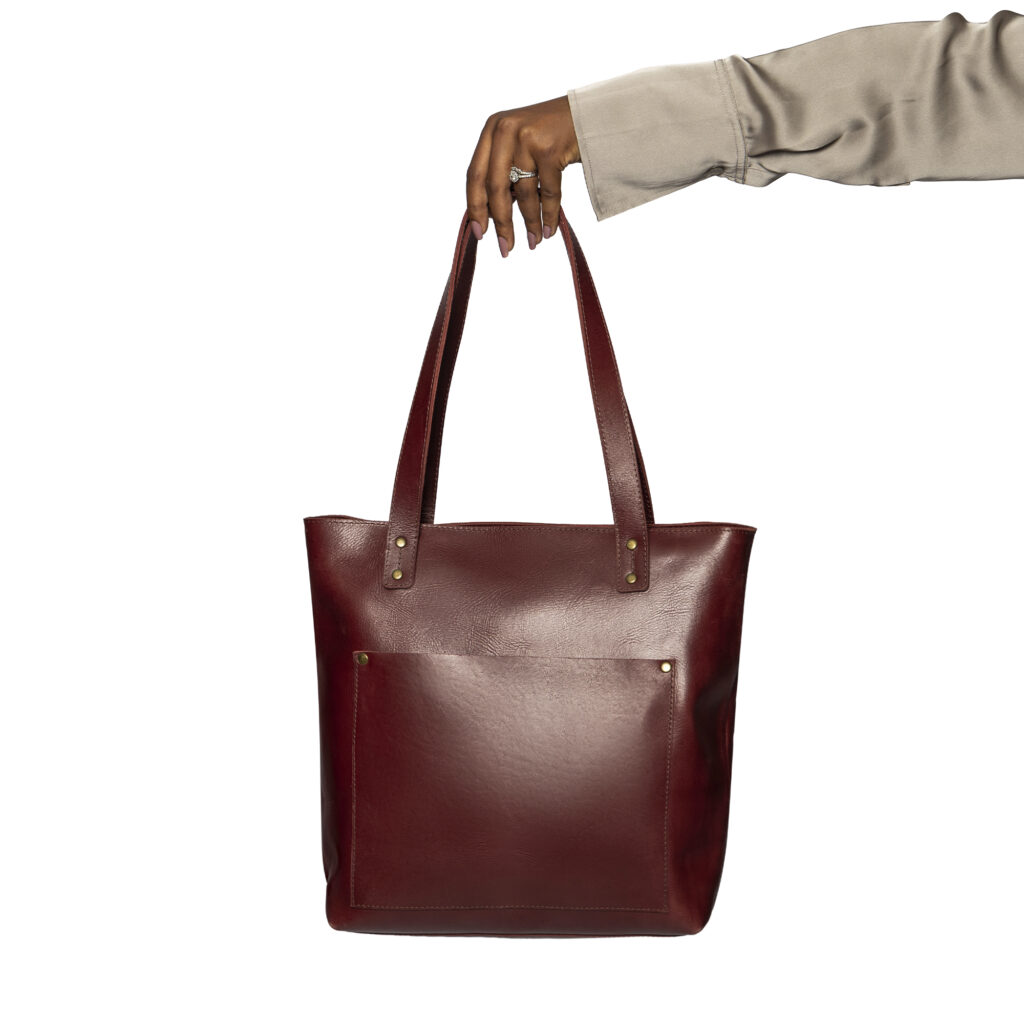
Most of us know what leather is, but fewer people understand that not all leather is the same. Are there different grades? Which part of the animal becomes leather? And why do some leather products last decades while others wear out quickly? Where Leather Comes From Leather is a natural byproduct of the meat industry and comes from the hide of animals such as cows, sheep, or goats after slaughter. Each hide is made up of several layers, but only one becomes leather. The hide consists of: Epidermis – the outer layer that contains hair or fur (this is removed) Dermis – the thick, collagen-rich middle layer that becomes leather Subcutaneous tissue – the inner layer made of fat and flesh (discarded) Once the hair is removed, the dermis is treated, tanned, and finished into leather. Common Types (Grades) of Leather Full-Grain Leather Full-grain leather is considered the highest quality and most durable leather available. It comes from the top layer of the hide and retains the natural surface of the skin. Because it is not sanded or heavily processed, it keeps its original grain, including natural markings like pores, wrinkles, and small scars. This minimal processing allows full-grain leather to remain strong, breathable, and moisture-resistant. Over time, it develops a beautiful patina, giving each piece a richer character and a story of its own. Top-Grain Leather Top-grain leather is also taken from the upper layer of the hide but is lightly sanded to remove surface imperfections. This creates a smoother, more uniform appearance. Because the sanding removes some of the strongest fibers, top-grain leather is slightly less durable than full-grain. However, it is often finished with a protective coating, making it more resistant to stains and scratches while still maintaining a refined look. Genuine Leather Despite the name, “genuine leather” refers to a lower grade. It is made from the remaining layers of the hide after the top layers have been removed. These layers are weaker and less durable. To improve its appearance, genuine leather is often treated with artificial textures and surface coatings. While it is real leather, it does not age as well and tends to feel stiffer compared to higher-grade options. Bonded Leather Bonded leather is considered the lowest leather grade. It is made from leftover leather scraps and fibers that are shredded, mixed with bonding agents like polyurethane or latex, and then pressed onto a fabric or paper backing. Although bonded leather may look like real leather at first glance, it lacks strength, flexibility, and longevity. Over time, it is more likely to crack or peel. Our Choice at Joywot Origin At Joywot Origin, we believe quality matters.That’s why all of our bags are crafted from full-grain leather, except for our suede pieces, which are intentionally selected for their soft texture and design purpose. When you choose Joywot Origin, you’re investing in: Durable, long-lasting materials Thoughtfully designed, limited-edition pieces Handcrafted bags made with care and intention Leather tells a story and we design our bags to age beautifully with you. Source & Inspiration: Bosca – Types of Leather: A Glossary